Maruti is not an online outlier, of course; other heavyweights have rolled out similar services. But as an analyst pointed out, Maruti's all-India roll-out has significant impact given that it accounts for over half of all cars sold, reports, reports Pavan Lall.

Shimla Police have seized assets worth Rs 4.13 crore from 19 drug traffickers and their associates, believed to be acquired through illegal drug trade. The action followed an arrest in August 2026, leading to a detailed financial investigation under the NDPS Act. This seizure is part of a larger effort in 2026, where assets worth Rs 12.52 crore have been confiscated in 15 NDPS cases.
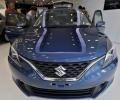
The domestic car sales volume of the company is also growing at 15%
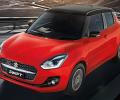
The country's largest carmaker Maruti Suzuki India (MSI) on Monday said it has increased prices of its entire product range, except Celerio, by up to 1.9 per cent with immediate effect. In a regulatory filing, the company noted that it has taken the decision to hike prices due to an increase in various input costs. The weighted average price rise in ex-showroom prices (New Delhi) across select models is 1.9 per cent, it added. This is MSI's third price hike this year.

In October, MSI recorded domestic sales of 96,002 units compared to 51,458 units in the year-ago period, registering a rise of 86.56 per cent, it added.

Maruti's exports in May were down 2.4% at 9,089 units
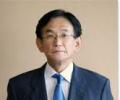
A law graduate from Osaka University, Ayukawa has been associated with Suzuki Motor for over three decades.

The company had sold 85,565 units in the same month last year.

Celerio was launched at a time when the Indian automotive market was going through a transition.

Priced at Rs 754,689, this is the sixth model from the company's portfolio after Alto, WagonR, Swift, Baleno and Dzire to be BS-VI compliant.

It is after seven years that a sedan has claimed the top spot -- Dzire had last achieved the No.1 position in 2018.

In what would be a generational change in its engine technology, India's largest car manufacturer Maruti Suzuki has decided to introduce the new K-series petrol engine in all its cars in India in the next three to five years, according to the company's annual report for 2007-08.
The country's largest carmaker, Maruti Suzuki, on Thursday reported 9.95 per cent decline in sales during December last year at 56,293 units against 62,515 units in the same month of 2007.
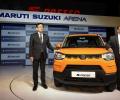
Maruti's strategy for the SUV segment is to arrest the decline in customers for entry level hatchbacks.
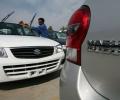
The country's largest carmaker Maruti Suzuki India (MSI) witnessed a 3 per cent drop in production last month. In a regulatory filing, the auto major reported total production of 145,560 units in November compared to 150,221 units in November 2020. "The shortage of electronic components had a minor impact on the production of vehicles during the month," it noted.

MSI chairman R C Bhargava said auto sector would like to see GST benefits linked to greener/cleaner cars. The government gave tax cut on EVs but hybrid should be given duty cut. There should be tax cut on CNG vehicles.

Tata Motors has emerged as the biggest market-share gainer among India's leading passenger vehicle (PV) makers in the first eight months of 2026, securing the No. 2 position in the PV market.

The Baleno is among the top selling cars with unserviced bookings of 55,000 units.

Indian markets on Dalal Street rallied sharply as easing tensions in the US-Iran conflict and stable oil prices boosted sentiment. Track Nifty 50 and BSE Sensex performance and key global triggers.
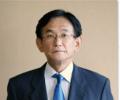
The appointment will be effective from April 1.

LIC sold a total of 58,29,103 shares of the company aggregating 2.018 per cent stake between August 24, 2009 and November 11, 2012 through the open market, Maruti Suzuki India said in a filing to Bombay Stock Exchange.

The country's largest car maker Maruti Suzuki India on Monday said its cumulative exports have crossed one million units with the milestone car headed for Denmark.

The country's largest carmaker Maruti Suzuki India on Tuesday reported 17.8 per cent increase in net profit at Rs 802.2 crore (Rs 8.02 billion) for the third quarter ended December 31, 2014

Kalyan Bainsla has been arrested in connection with an alleged road rage incident in Gurugram where he reportedly hit a woman biker with his car after making indecent comments. The victim, Shivani Chauhan, survived due to protective gear. Bainsla, who claims it was an accident, was apprehended in Rajasthan's Dausa, and police are investigating the role of another person present.

Indian benchmark indices, Sensex and Nifty, rebounded in early trade after two days of decline, driven by positive global market trends and strong buying in auto stocks. This recovery follows a robust performance in US markets and a rally in Asian markets, particularly Japan's Nikkei, fueled by AI-driven technology optimism. Track Sensex, Nifty on July 1.

Nissan, Japan's fourth-largest car manufacturer, sells MSIL's A-Star as Pixo, an entry-level car, in Europe.

"Currently work is going on for developing a diesel engine for mid-sized sedans. Our engineers are developing it internally and we are hopeful of getting it ready by mid (of) next year," said MSI Managing Director and CEO Shinzo Nakanishi.

Maruti takes a leap in terms of technology with features like ADAS, a 360-degree camera, ventilated seats, a powered tailgate, audio system with Dolby Atmos and much more.
The three companies would jointly invest in setting up a manufacturing unit at Manesar in Haryana, expected to be operational by end of calendar year 2008. The facility, when fully operational, would have a capacity to produce five lakh units per annum, MSIL said in a statement.

India's domestic passenger vehicle sales experienced a robust 24.6 per cent year-on-year increase in June, propelled by favourable government policies like income tax relief and repo rate cuts, alongside resilient rural demand, even as global crude oil prices pose potential cost pressures.
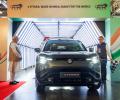
Japanese automaker Suzuki Motor Corporation will invest Rs 70,000 crore in the next five to six years in India to strengthen its operations in the country, its representative director and president Toshihiro Suzuki said on Tuesday. Prime Minister Narendra Modi on Tuesday kicked off exports of Maruti Suzuki India's first electric vehicle e VITARA to 100 countries and also inaugurated the production of lithium-ion battery cells for strong hybrid electric vehicles at its facility in Gujarat.

India's passenger vehicle industry is poised for a record-breaking year in 2026, propelled by robust dispatches in the first half of the calendar year and strong demand for utility vehicles, despite facing several economic challenges.

A year after GST rates were rationalised, retail growth in automobiles has sustained beyond the initial festival surge, led by two-wheelers and passenger vehicles (PVs), with the Fada data showing rural markets emerging as a key driver of the post-GST demand recovery.

The stock of the country's largest passenger vehicle maker, Maruti Suzuki India (MSIL) was down 1.06 per cent in trade on margin pressures in Q1FY24, mixed market share outlook, and earnings impact due to the buyout of Suzuki Motor Gujarat. While MSIL has decided to terminate the contract manufacturing agreement and acquire Suzuki Motor Gujarat, the quantum of payment and mode (cash/equity swap) has not been decided. If the cash option is opted for, there would be a 3.5-4 per cent hit to MSIL's FY25 earnings per share as the deal is expected to be completed by the end of the current financial year.
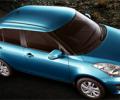
The company had set an annual production target of 250,000 for its Hansalpur plant in Gujarat.

Tata Motors expands its market leadership in India's electric passenger vehicle (ePV) segment, capturing 39 per cent of the market in Q1FY27, while simultaneously strengthening its position as the nation's second-largest carmaker amidst fierce competition and rapid market growth.

The Tata Aeris iCNG, evolving from the Tigor, offers a modernized exterior and a feature-rich interior. It boasts innovative twin-cylinder CNG technology for maximum boot space, premium comfort features like ventilated seats and a 360-degree camera, and a smooth driving performance. Priced competitively, it aims to challenge rivals in the segment while offering enhanced practicality.

Maruti Suzuki sold more cars than ever before, earned more money, and saw many first-time buyers choosing small cars again.
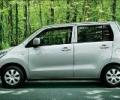
Maruti Suzuki, the market leader in the passenger car market in India is betting big on the A2 segment which is the biggest contributor to the overall passenger car sales in the country.

Indian passenger vehicle manufacturers are significantly increasing production and stocking dealerships in anticipation of strong festival season demand, with new launches planned and supply bottlenecks being addressed. However, the industry faces potential moderation in growth during the second half of FY27 due to a high base from last year's post-GST surge, commodity inflation, and elevated inventory levels.
